
For over a decade, I’ve worked on AI/ML products where mistakes have real consequences. In two key projects — automating legal document review for brokerages, and using AI to identify college students with leadership potential— I bridged the gap between data science and human trust, ensuring adoption in high-stakes contexts.
Legal Document Automation (Startup, Acquired in 2023)
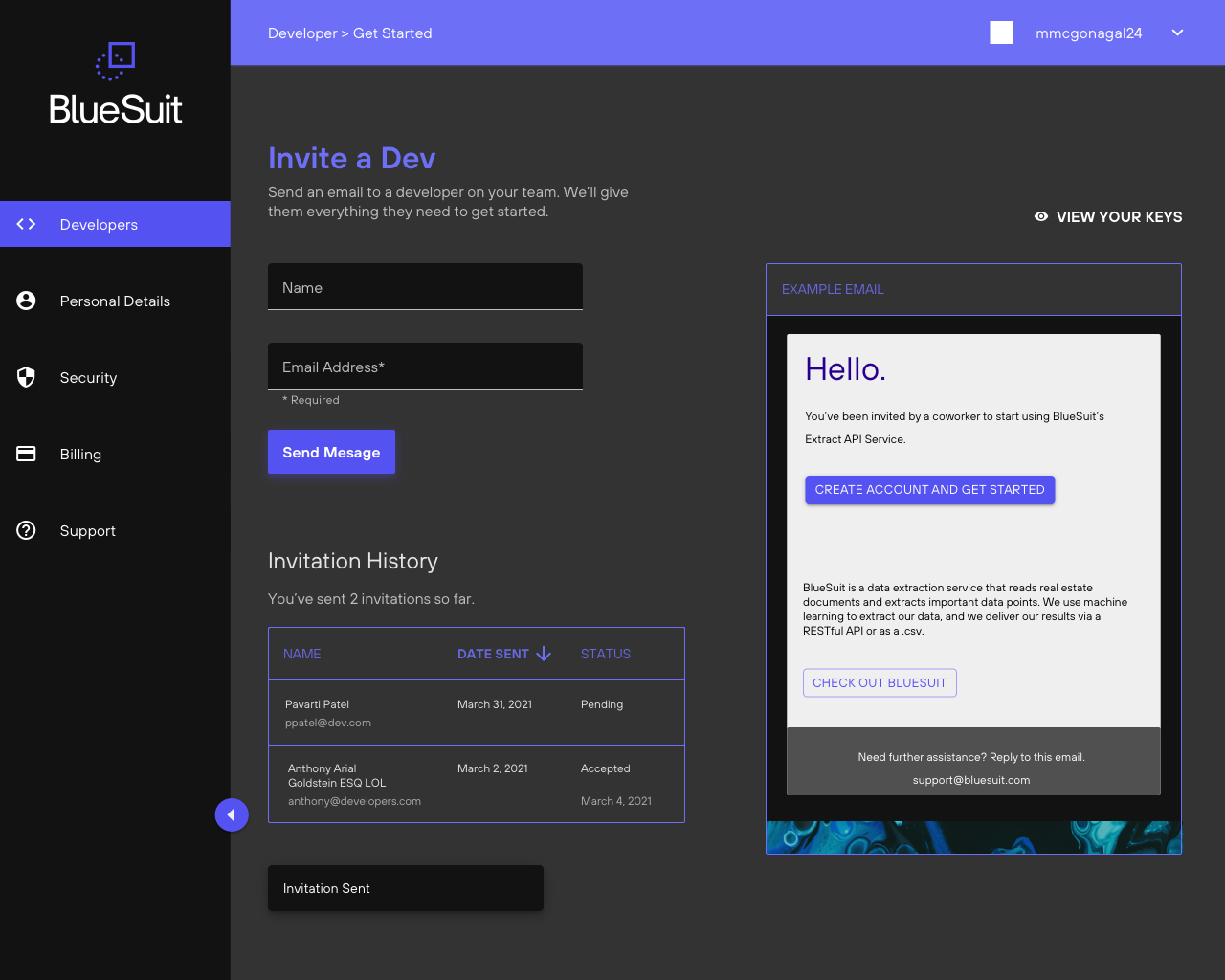
Brokerage firms were spending a great deal of time parsing important legal documents. Our AI could extract key data points in the formats they needed. However, without trust, users double-checked everything thus negating time savings. The insights about trust and what we needed to achieve a high level of trust, informed the technical architecture for the company’s next evolution into an API product.
My Role as a Strategist, Designer and Researcher:
- Led research with brokerage teams, specifically the people who were responsible for parsing contracts and sharing the data. I identified their pain points, but also their motivations— what they liked about their jobs.
- Designed and prototyped trust mechanisms (including confidence scores, side-by-side document verification).
- Tested prototypes with brokerage users.
- Translated insights into features for engineering and data science teams.
Impact:
- 65% reduction in document processing time.
- Created a reusable trust framework that was intuitive and an interface that was easy-to-learn (no training time and costs). Accelerated adoption and reduced barrier to brokerages making changes with their staff and processes.
- The company evolved and later offered the AI tool for parsing as an API. Our testing with users in the field helped the company choose a strategy that leveraged “human-in-the-loop” to provide data that met brokerage needs for accuracy and immediate usability.
Student Biography Analysis (non-profit)
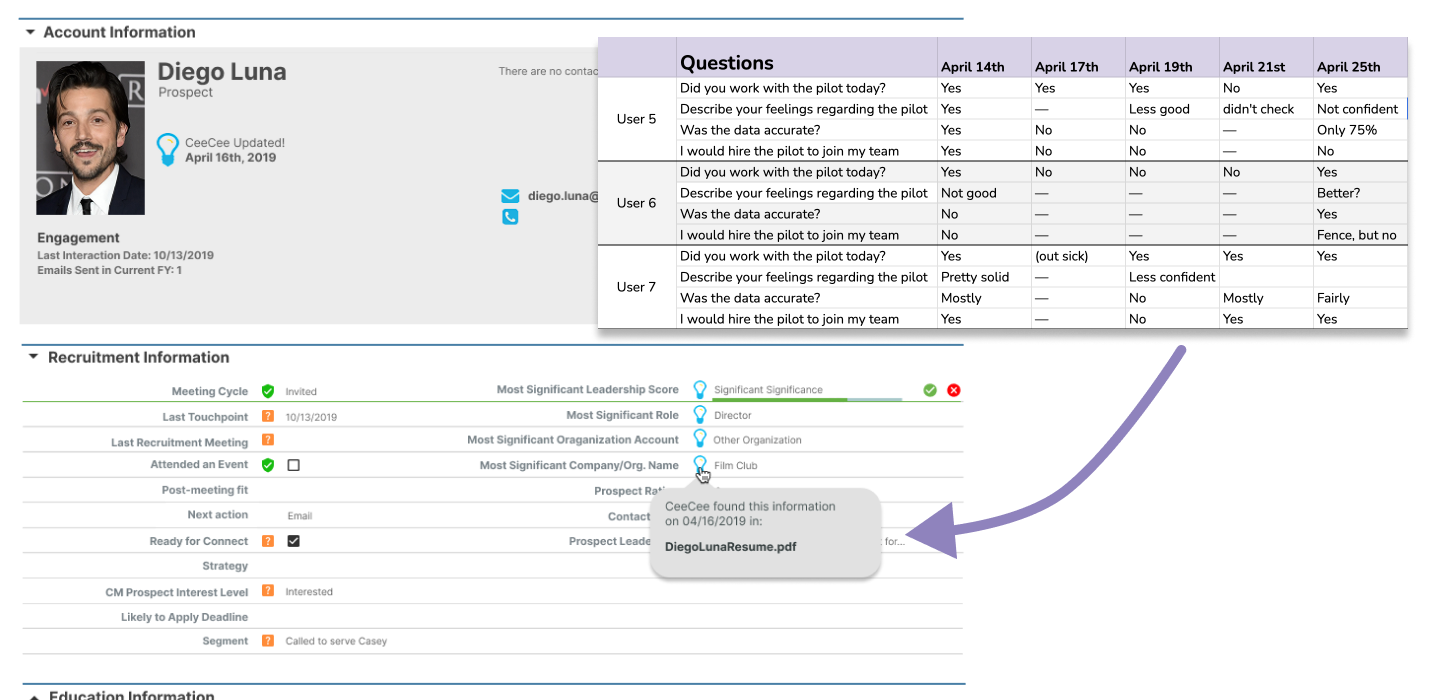
Recruiters needed to identify candidates quickly to maximize valuable face-to-face interactions. AI could accelerate research— but just one wrong fact in a conversation damaged credibility and trust.
My Role as the Product Manager and Design Lead:
- Ran a longitudinal diary study with recruiters, who agreed to pilot this in their work over a couple months, to measure real-world trust and adoption. Specifically, to see how that trust could evolve over time through repeated use.
- Imagine 100 students with 10+ data points each— Even with our best models (a 1% error rate!) still meant near certainty of an error across multiple interactions. Despite a bounty of positive data points, many participants in the study experienced an awkward interaction due to a single point of inaccurate data. This led to lost leads.
- Advised pivot away from AI in high-risk, high value personal interactions.
Outcome:
- Shifted AI toward lower-stakes automation. Less risk at the top of the funnel for example.
- Delivered a framework for evaluating AI suitability based on risk and credibility.
Key Lessons Across Projects
- Technical accuracy and statistical significance is not enough. Adoption relies on user trust.
- Trust-building features such as explainability, verifiability, are critical in high-risk contexts.The most durable trust is trust that is earned.
- The bridge between human confidence and technical capabilities drives success.
Positioning
I help organizations build AI products that people trust and use — even when the technology isn’t perfect — by aligning technical capability with human needs, ethics, and real-world context. I work cross functionally with data scientists, developers, analysts, product teams, and users to design products that meet goals.